

Keynotes

Title: DiffRender-VLA: Bridging 3D and 2D Robot Policies
Bio:
Professor Xiangjian (Sean) is currently the Chair Professor of Computer Science and Technology, Deputy Head of Computer Science School and the Director of Computer Vision and Intelligent Perception Laboratory at the University of Nottingham Ningbo China (UNNC). He is a National High-Level Talent of China, and in list of the ‘World Top 2% Scientists’ jointly released by Stanford University and Elsevier in the single-year database of 2022-2025 and the career-long database. He was the Professor of Computer Science and the Leader of Computer Vision and Pattern Recognition Laboratory at the Global Big Data Technologies Centre (GBDTC) at the University of Technology Sydney (UTS) from 2011-2022. He was involved in a team receiving a UTS Chancellor’s Award for Research Excellence through Collaboration in 2018. He led the UTS and Hong Kong Polytechnic University (PolyU) joint research project teams winning the champion for the 2019 VIP Cup, awarded by IEEE Signal Processing Society. He recently led a UNNC team achieving the 1st Place Overall in the Foundation Model Challenge for Ultrasound Image Analysis awarded by IEEE ISBI 2026. He has been carrying out research mainly in the areas of computer vision, data analytics and machine learning in the previous years. He has played various chair roles in many international conferences such as ACM MM, ICDAR, IEEE BigDataSE, IEEE IEEE TrustCom, IEEE CIT, IEEE AVSS, IEEE ICPR and IEEE ICARCV. He has received various competitive national or regional grants including five grants awarded by Australian Research Council (ARC) as a Chief Investigator. He has many high quality publications including ESI highly cited papers, papers in prestigious journals such as npj Digital Medicine (a Nature partner journal), Journal of the Association for Information Science and Technology and ACM Computing Surveys, IEEE Transactions journals such as IEEE Transactions on Pattern Analysis and Machine Intelligence (TPAMI), IEEE Transactions on Multimedia, etc., and in Elsevier’s journals such as Pattern Recognition, Knowledge-Based Systems, Expert Systems with Applications, Signal Processing, Information Fusion, Information Sciences, etc. He has also had papers published in premier international conferences and workshops such as AAAI, ACL, IJCAI, CVPR, ICCV, ECCV, ACM MM, ICDAR, WACV, etc. He is currently an Associate Editor of IEEE Transactions on Multimedia, Springer-Nature Computer Science Journal, the journal of Human-centric Computing and Information Sciences, etc.
Abstract
Robotic manipulation requires both spatial reasoning and visual perception, yet current Vision-Language-Action models (VLAs) excel at only one. 3D VLAs reason precisely but lack visual intuition, while 2D VLAs perceive richly but miss explicit spatial grounding. We introduce DiffRender-VLA, a differentiable rendering framework that bridges this gap. It generates images that embed 3D spatial semantics by localizing target actions, encoding geometry with color-coded directional beams, and learning adaptive viewpoints. This creates a closed gradient loop, allowing 2D VLA losses to directly improve 3D spatial representations. Experiments show state-of-the-art results, with an average +12.1% improvement in simulation and +17.5% on real robots, demonstrating effective transfer of geometric understanding into interpretable visual policies.
Title: The Future of the Internet of Things: Intelligent Connectivity through AI and Space–Air– Ground Integrated Networks
Bio:
Nei Kato is a full professor and with the Graduate School of Information Sciences, Tohoku University. He has studied computer networking, wireless mobile communications, satellite communications, ad hoc & sensor & mesh networks, UAV networks, AI, IoT, and Big Data. He served as the Vice-President (Membership & Global Activities) of IEEE Communications Society(2018-2021), the Editor-in-Chief of IEEE Transactions on Vehicular Technology(2017-2021). He is the Editor-in-Chief of the IEEE Internet of Things Journal, a Fellow of The Engineering Academy of Japan, IEEE, and IEICE.
Abstract
Title: The Future of the Internet of Things: Intelligent Connectivity through AI and Space–Air–Ground Integrated Networks
Abstract:
The rapid growth of the Internet of Things (IoT) is transforming industries and society by enabling intelligent applications across smart cities, transportation, healthcare, agriculture, and industrial automation. However, supporting billions of interconnected devices with diverse quality-of-service requirements demands communication networks that are not only ubiquitous and reliable but also intelligent and adaptive. Space–Air–Ground Integrated Networks (SAGIN), which seamlessly integrate terrestrial, aerial, and satellite platforms, offer a promising solution for extending IoT connectivity beyond the limitations of conventional terrestrial networks. This keynote explores how Artificial Intelligence (AI) can unlock the full potential of IoT over SAGIN by enabling predictive, adaptive, and autonomous network operations. The talk will highlight recent advances in AI-driven IoT traffic prediction and resource allocation, learning-based routing for dynamic multi-layer networks, digital twins for intelligent IoT management, optical wireless communications for high-capacity backhaul, and multi-access edge computing (MEC) for latency-sensitive IoT services. The keynote will also discuss the challenges and future research directions toward building scalable, resilient, and intelligent IoT ecosystems for the 6G era. By bringing together AI, SAGIN, and next-generation networking technologies, this keynote provides a vision of how future IoT systems can achieve seamless global connectivity, efficient resource utilization, and intelligent service delivery for emerging applications.
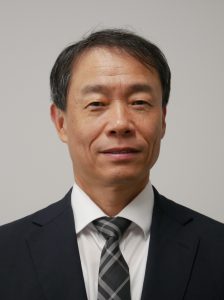
Professor and Dean, Graduate School of Information Sciences, Tohoku University, Japan
